
Why is the first board position the hardest to land?
Lack of board experience is a commonly perceived barrier to landing your first board position. It may be difficult to convince a company that you are ready to take on responsibility when you do not have a proven track record in the field.
The primary duty of boards of directors is to be in charge of the overall and strategic management of the company, so they want members with an understanding of business strategy, but also risk management.
Even if your CV is not long, a board programme and the networking it provides can strengthen your chances of landing your first board position. You will be taught topics such as the responsibilities and financial role of the board of directors.
Of course, we would love to meet you on the Board Certificate programme, but before that, this page will prepare you better for pursuing a career in corporate boardrooms.

Frederik M. Braun
Director, Microsoft
ABOUT BOARD CERTIFICATE
“Good, professional and well organized education, where the teachers had a very high level. A strong foundation for any board member.“
Understand the role of the board
As a board member, you are not directly responsible for day-to-day operations, but for the overall and strategic management of the company. Together with the other board members, you set the direction for the organisation and ensure that the executive team has the right framework for success.
Board work is not only about developing strategy and business goals, but also about keeping an eye on the company’s risks, finances and governance. As a board member, you act as a sounding board to the executive team and are instrumental in making decisions that can have a major impact on the company’s future.
Take stock of your skills
When you want to become a board member, it is a good idea to map out your skills profile. Find out what management and business experience you have and, ideally, make an effort to think broadly. Just as a board of directors needs members with financial and legal skills, there is often also a need for knowledge of digitalisation, ESG, strategy, communication or industry knowledge.
Your skills profile should also cover the results you have achieved so far based on your skills and competencies. The value of measurable numbers and clear-cut cases is no doubt the easiest to understand for people who do not know you personally.
Once you have pinpointed your strengths, it becomes easier to see where you may need to upgrade your knowledge – for example through a board leadership programme, which can be an excellent way to put your skills into a boardroom context.
Learn more about board training
Our three-day training programme will fill your knowledge bank with the latest trends and tendencies from the world of board governance. You will expand your network and be inspired by our talented facilitators for your next step in your board career.
At Board Company, we have trained more than 10,000 board members and senior executives across Europe. Interested in learning more? Fill in our contact form and receive more information about this.
Receive information about Board Certificate
Information will be sent via Email
Add training credentials to your board CV
A board CV is not just an ordinary résumé. It should clearly highlight your strategic skills, achievements and ability to think at a corporate level.
Therefore, focus on aspects such as:
- Your leadership, change and growth experience
- Collaboration with senior management and, where relevant, previous experience of working on boards
- Proven achievements – preferably in terms of numbers and specific cases
- Certifications, degrees, programmes and the like
A strong board CV shows how you can contribute to the development of the company – not just how you have handled day-to-day tasks and duties.
Test your skills in practice
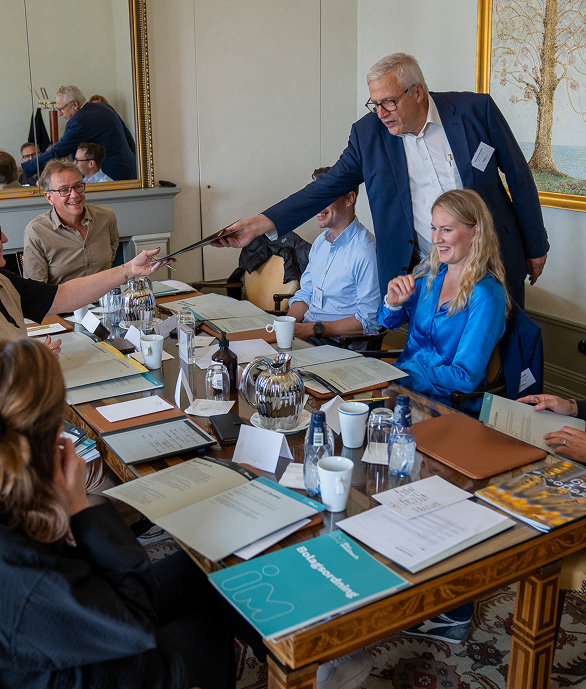
During our three-day training programme, you will be taught by skilled professionals who will provide you with important insights into the world of boardrooms. They draw on experience from long board careers, but also from business roles where they directly feel the impact of undertaking board duties.
During the three training days, you will also be updated on the latest news, trends and tendencies in the industry and gain an international perspective on your knowledge. The programme concludes with a unique opportunity to put your skills as a board member into practice.
The Board Game
The Board Game is a simulation game in which you can try out realistic boardroom scenarios. This gives you a better sense of your abilities as a board member in practice. Knowing your strengths and weaknesses before you take a seat on a board enables you to act accordingly – for the benefit of the company you are managing.
Networking is key to your board career
Most board positions are never publicly advertised. They are filled through networking. It would therefore be to your benefit to:
- Map out your relationships and connections (attorneys, accountants, senior executives and officers in your industry)
- Participate in relevant networks and events
- Prepare a powerful elevator pitch that clearly explains what you have to offer.
You need to be able to explain to your network why you will be an asset to a board. Our board programme offers you the knowledge and language to use in your networking.
You will also have the opportunity to join the Board Forum, our exclusive network for people who have previously completed our programme. The Board Forum is facilitated in collaboration with Columbia Business School alongside a selection of leading businesses in Denmark.
The forum supports your continuing professional development and provides you with the expanded network you will need as a newly appointed board member.
The path to becoming a board member – step by step
There is no straight way to becoming a board member for the first time, but we can guarantee you that the following steps can help pave the way for you.
1. Take stock of your skills
What exactly can you bring to the table? How can you develop your skills further?
2. Write a board CV
Highlight achievements, strategic experience and, if applicable, training credentials
3. Seek more knowledge
Enrol in a board training programme such as the Board Certificate, participate in forums and seek out hands-on experience. The latter you will gain from our Board Game programme.
4. Use your network actively
Most positions are never publicly advertised, so seek out the people you can learn from, benefit from or develop with.
FAQ
Why should I enrol in a board programme through Board Company?
Board Company is one of Denmark’s most experienced providers of board training and has already trained over 10,000 board members around the world. With the Board Certificate, you do not just get a theoretical overview – you are taught by seasoned board members and other relevant professionals while gaining hands-on experience through the recognised simulation game The Board Game.
The programme gives you:
- A deep understanding of the role, responsibilities and strategy of the board of directors
- Insight into current trends and tendencies in board work
- An opportunity to widen your network and become part of the Board Forum
- A strong signal to future companies that you take your board duties seriously.
Whether you are new to the world of boardrooms or want to strengthen your current profile, a board programme provides a solid and recognised stepping stone.
Can I enrol in a board programme without being a board member?
Yes, it is perfectly alright for you to receive training in board work before accepting your first board position. A board programme can give you the knowledge, network and confidence that make it easier to land your first board position. Successful completion of a training programme shows that you are serious about your role as a future board member.
How do I become a board member when I do not have any experience yet?
Experience is rarely the only thing it takes to become a board member. Many boards are also looking for members with specific expertise and a diverse network that can help the company progress its growth strategy.
Enrolling in a board programme is therefore a good place to start. It will enhance your knowledge in the field while presenting an opportunity to develop your network with people who share your interest in board work.
After completing the Board Certificate programme, you can become part of our directory of board members. Through our platform, called Board Selection, boards have the opportunity to search for competent members, and as you are included in the directory, you may be considered for vacancies.
How do I gain access to board networks?
There are plenty of relevant networking groups and events for people in the world of board governance. We offer a number of these annually to the members of our select board network, the Board Forum.
How do I build a strong board CV?
Focus on your strategic skills, management and leadership experience, collaboration with senior executives and proven achievements. Remember to include relevant degrees, programmes and certifications.